Hardware / Software Fusion

The engineering of hardware has come a remarkable distance in four decades. From Industry 2.0 to the impending 4.0, mass manufacture, material manipulation and computational control have together driven advances that, frankly, surpassed what most of us expected was possible. But none of those is the real inflection point. The single most influential development has been the fusion of software into hardware, a partnership that has transformed product function and consistency, and bent the entire development curve upward.
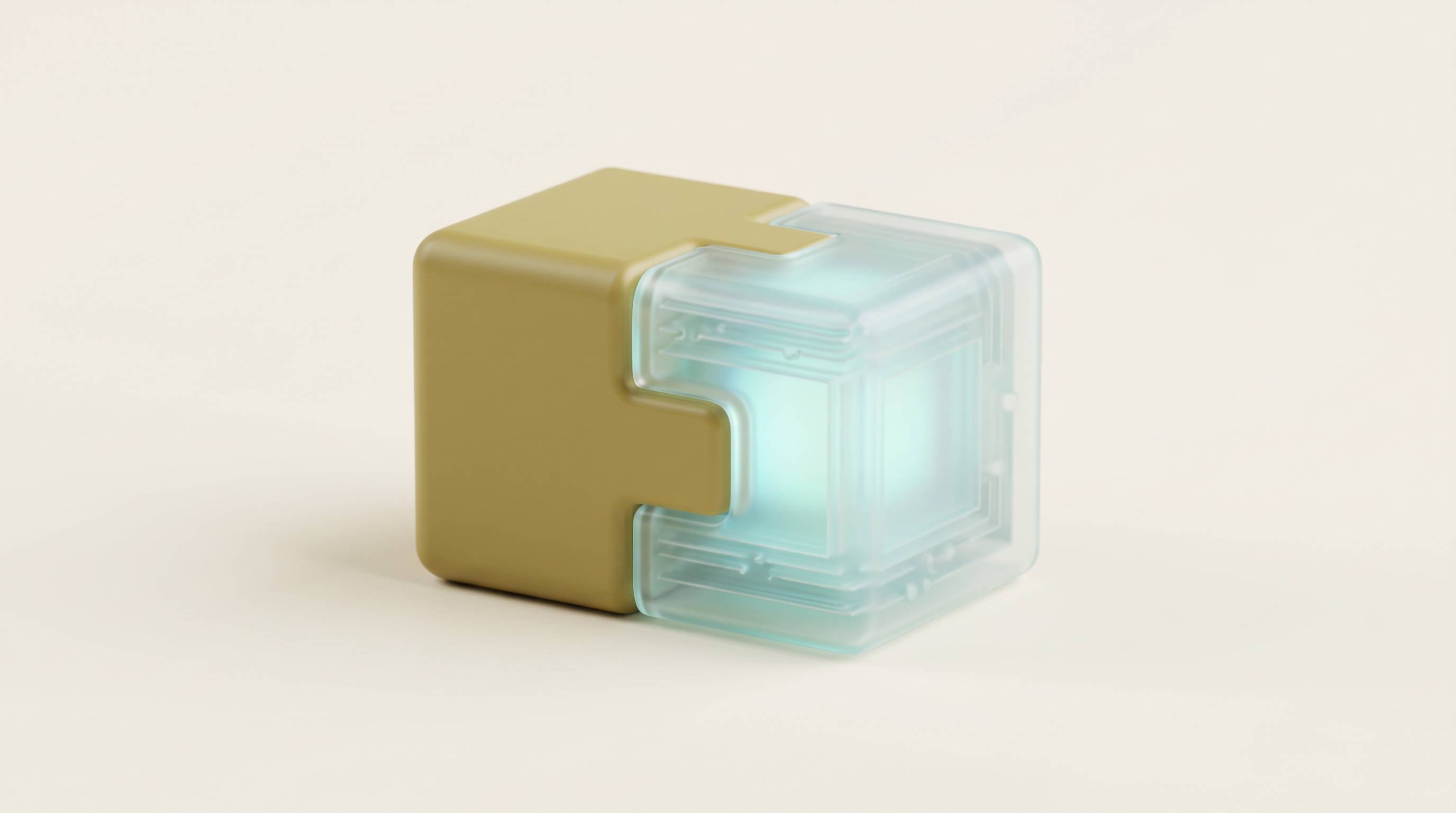
We call the result Fuse-ware: not hardware with software bolted on, but the two engineered as one. Apart, each is effective within its own limits. Hardware delivers the solid, physical, dependable thing; software delivers speed, logic and change. Fused, the possibilities open up in a way neither could reach alone, and high-performing efficiency, rich functionality and, crucially, updatability stop being premium features and become the baseline. Automotive, handheld and wearable products are already living proof.
The deeper shift, though, is economic. Physical hardware is capital-hungry and energy-intensive; its high up-front cost has always demanded high production volume to make the return on investment viable. Fuse-ware changes that maths. Because infused software can improve the physical product's functions after it has shipped, with better efficiency, new capabilities and fixes, the hardware now earns a longer useful life. The customer no longer has to replace the whole object to get a better version of it. Pair that with modular cosmetic design, and a credible "new model" can be delivered fast and cost-effectively through a software update and a light physical refresh, rather than a full, frequent, capital-intensive re-tooling.
This resolves a tension that would otherwise pull the industry apart. The market's appetite for the latest technology is accelerating, and that appetite has historically forced shorter product cycles and ever-higher production volumes to justify the capital. Fuse-ware satisfies the hunger for "new" without demanding a physical rebuild each time. The novelty arrives as a software refresh; the expensive hardware underneath endures. Longer lifecycles and a faster sense of progress stop being opposites.
Automotive is the clearest proof case. Over the last two decades the European chassis lifecycle has compressed from around 16 years to 10 to 12. Model updates have fallen from roughly 8 years to 5 or 6. Facelifts now land every 2 to 3 years. This acceleration answers a market, customers and legislators alike, demanding ever-faster progress in technology, efficiency and safety. What is striking is the cadence: an industry whose development once moved at a mechanical pace is now starting to track the rhythm of electronics, where capability compounds on the kind of timescale Moore's law made familiar. Cars are beginning to iterate more like processors than like machines.
And the frontier points further still. The signal from the major technology suppliers is that AI itself will increasingly operate as an encapsulated device system, the intelligence and the silicon fused into a single self-contained product rather than a service reaching in from the cloud. That is Fuse-ware in its purest form: not software enriching hardware from the outside, but the two becoming genuinely inseparable. It is the direction the whole curve has been bending toward, and the products that master the fusion will define the next generation of markets.
Related reading: an encapsulated AI device is fusion at the level of the whole system, the same deliberate pairing of human and machine capability we argue for in The Carbon and Silicon Balance. It also raises a question we take up in The Growing Desire for Genuine & Authentic: when intelligence is sealed inside a product, how do we verify what is really inside it?