Lightning in a Bottle
There is one accolade that marks a product as a true success, and you cannot buy it or engineer it directly: the moment its name stops being a noun and becomes a verb. We Google a question, we Hoover the carpet. When a brand crosses that line it has stopped being a thing people use and become the way people describe the activity itself, the clearest signal a product has read a human need so accurately that it disappears into everyday life.
The catch is that almost nobody can tell in advance which product will earn it. At first glance the eventual winners often look unremarkable, even unlikely. Predicting the outcome means weighing an enormous number of variables: behaviour, timing, taste, competition, the mood of a market, and holding a view that runs from the macro all the way down to the micro. It is genuinely hard, and historically it was harder still, because the research needed to do it properly cost more time and money than any investor's patience could bear. So most companies did not attempt it. They guessed, and called the result instinct.
This is where the Steve Jobs example is usually misread. Jobs famously dismissed asking people what they want, and Apple built world-changing product formats with little conventional market research. The lesson people take is that data does not matter. The truer lesson is narrower: Jobs rejected asking people, not understanding them. People are poor at describing what they want in a survey, but their behaviour rarely lies. Jobs simply trusted observed reality and his own read of it over stated opinion.
That distinction is exactly what has changed. Mass computation now lets us capture what people actually do, at scale, rather than what they claim in a focus group, a holistic picture instead of a handful of compartmented studies. It is closer to the Jobs method than to the clipboard survey he despised, and it does it at a fraction of the old cost. The research bill that once exceeded any investor's patience can now be absorbed, because AI does the heavy gathering and pattern-finding that used to take a department a year.
Consider how the two halves work together. A founder has an intuition that people would adopt a habit they have never asked for, the kind of hunch that no survey would ever validate. Historically that hunch was an expensive coin-flip. Now it can be tested against the actual behavioural traces of millions of people: where attention goes, what gets abandoned, which small frictions people quietly route around. The data does not replace the intuition; it tells the founder whether the latent need they sensed is really there before the capital is committed.
That is the formula. Not data instead of instinct, and not instinct instead of data, but human intuition and lived experience pointing at the question, and AI-scale observation answering it. It is the Carbon and Silicon balance applied to discovery: a deliberate ratio of human and machine, not the wholesale replacement of one by the other. The product that becomes a verb is the one that read a latent human need correctly, and for the first time, finding that need ahead of time looks less like luck and more like something you can actually do.
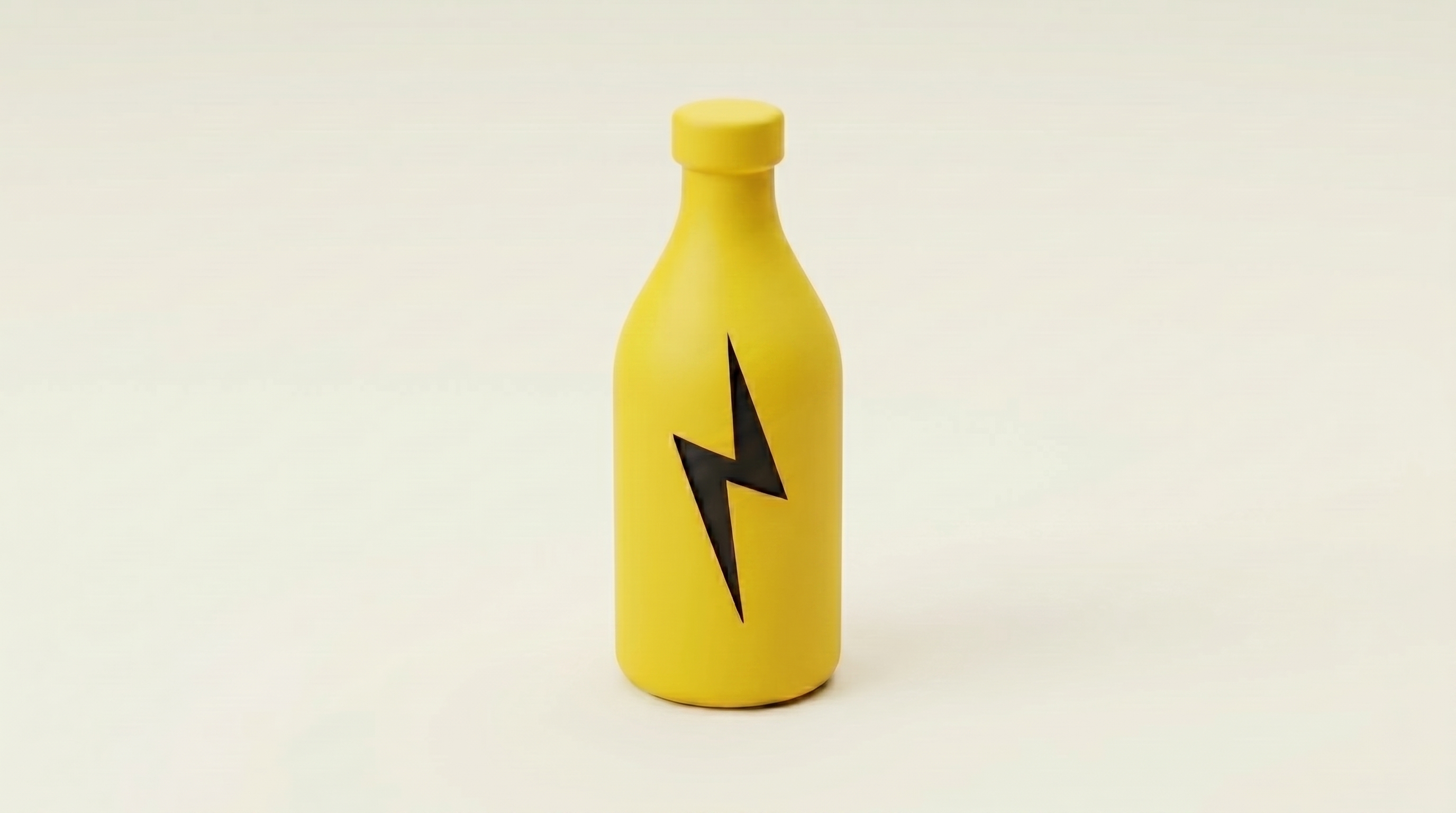
Lightning in a bottle, it turns out, was never really luck. It was a need nobody had named yet. The difference now is that we finally have a way to go looking for it.
Related reading: knowing a winner is possible is one thing; knowing when to move is another. We map the timing question in Micro, Mega & Macro Trends.